
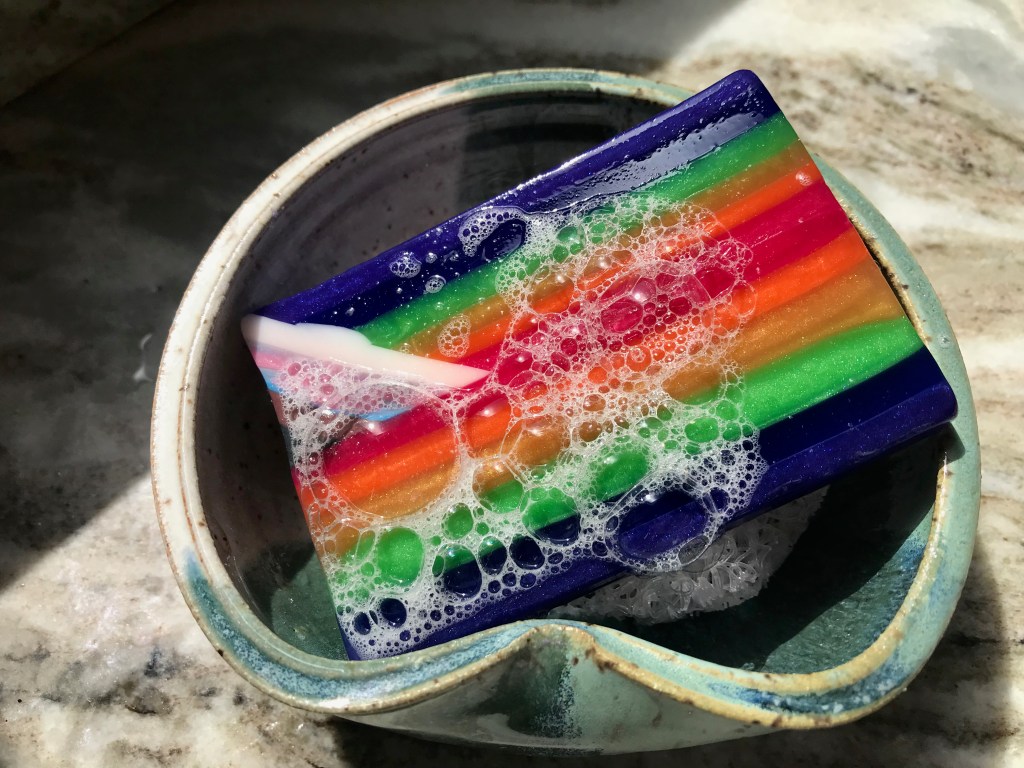
“Soap and friction help lift dirt, grease, and microbes-including disease-causing germs from the skin so they can be rinsed off of hands and body” (CDC, 2021). Using handmade soaps guarantees you know what is in the soap you are using. Your skin can tell the difference when using plant oils and butters. By using hand made soap you are avoiding harsh chemicals, no preservatives, no excessive packaging, and cold process (CP) soaps last longer!
Liquid soap and body wash (and many beauty or cleansing bars) are detergents in disguise. The foams and bubbles are produced by surfactants which are chemical petroleum by-products. It dries your skin and disrupts the natural balance of the skin’s protective properties.
Small-batch crafted soap which is what I create contains naturally occurring glycerin, a humectant that attracts and retains moisture. Plant fats naturally contain about 8-13% glycerin. Commercially available soaps strip out the naturally occurring glycerin and sell it for other uses. Which means commercially available soaps are detergents and not actually soap.
Handmade bar soap does not require preservatives to stay fresh, safe, and effective. Any liquid soap, hand wash, body wash, and personal care products which contain water must be properly preserved with preservatives. It is better for aquatic life in the ocean and for your family to avoid preservatives when you have the option. So why not use a product which helps the skin to maintain moisture hours after you wash?!
Handmade cold process (CP) soap is created by mixing oils or fats and sodium hydroxide (lye). The reaction that takes place is called saponification which takes 24-48 hours. During saponification lye and oils are binding and turning into salts of the fatty acids. The result is a combination of soap and glycerin.
 JennyJSoapCo.